


Transparency in The Supply Chain
In 2010, Harvard Business Review published this article on “The Transparent Supply Chain”, which discussed the evolution of consumer interest in product origins. It provided several key and instructive take-aways for companies seeking to start down the sustainability path. One in particular – transforming marketing – revealed the importance of integrating both marketing and supply chain strategies.
Credit: © Stockbakery | Dreamstime.com
In 2010, Harvard Business Review published this article on “The Transparent Supply Chain,” which discussed the evolution of consumer interest in product origins. It provided several significant and instructive takeaways for companies seeking to start down the sustainability path. One in particular – transforming marketing – revealed the importance of integrating both marketing and supply chain strategies. In the article, the author states that “tools to track provenance will become an important part of the marketing mix.” This new imperative is a huge opportunity for marketers to create new or improve existing brand value in the customer’s eyes. More importantly, it solidifies the significance and the broader scope that the entire value chain has when considering “Place" in the marketing mix.
In “Sustainability Marketing is Simply Just Marketing,” I discuss how most online literature on the topic of marketing sustainability primarily focuses on promotion. Yet, even the two articles I reference, each acknowledges the value of place in these efforts. In one commentary on the Sustainable Brands website, the author provides insight into the benefits to companies selling their sustainable products direct to customers online. At the same time, this article by Precision Marketing Group opines that manufacturers need to incorporate sustainability throughout the supply chain. The reality is that both pieces are correct. Where many companies fail is in recognizing the pivotal role marketing has in both scenarios.
Marketing’s Role with the Supply Chain
“Marketing supports supply chain agility and flexibility.”
Traditionally, marketing focused on selecting the best sales channels, which is evident to most businesses. What is more subtle is the significance of the supply chain in the marketing mix. As I have mentioned in an article on the importance of the marketing mix with branding, place is not just about distribution or reaching consumers. It also refers to the supply chain. Since companies make sourcing decisions during product development, product design must integrate sustainability requirements into specifications provided to suppliers. The result is a value chain that encompasses sustainability, beginning with raw materials, through incremental processing and manufacturing, as well as the delivery of finished goods to the customer.
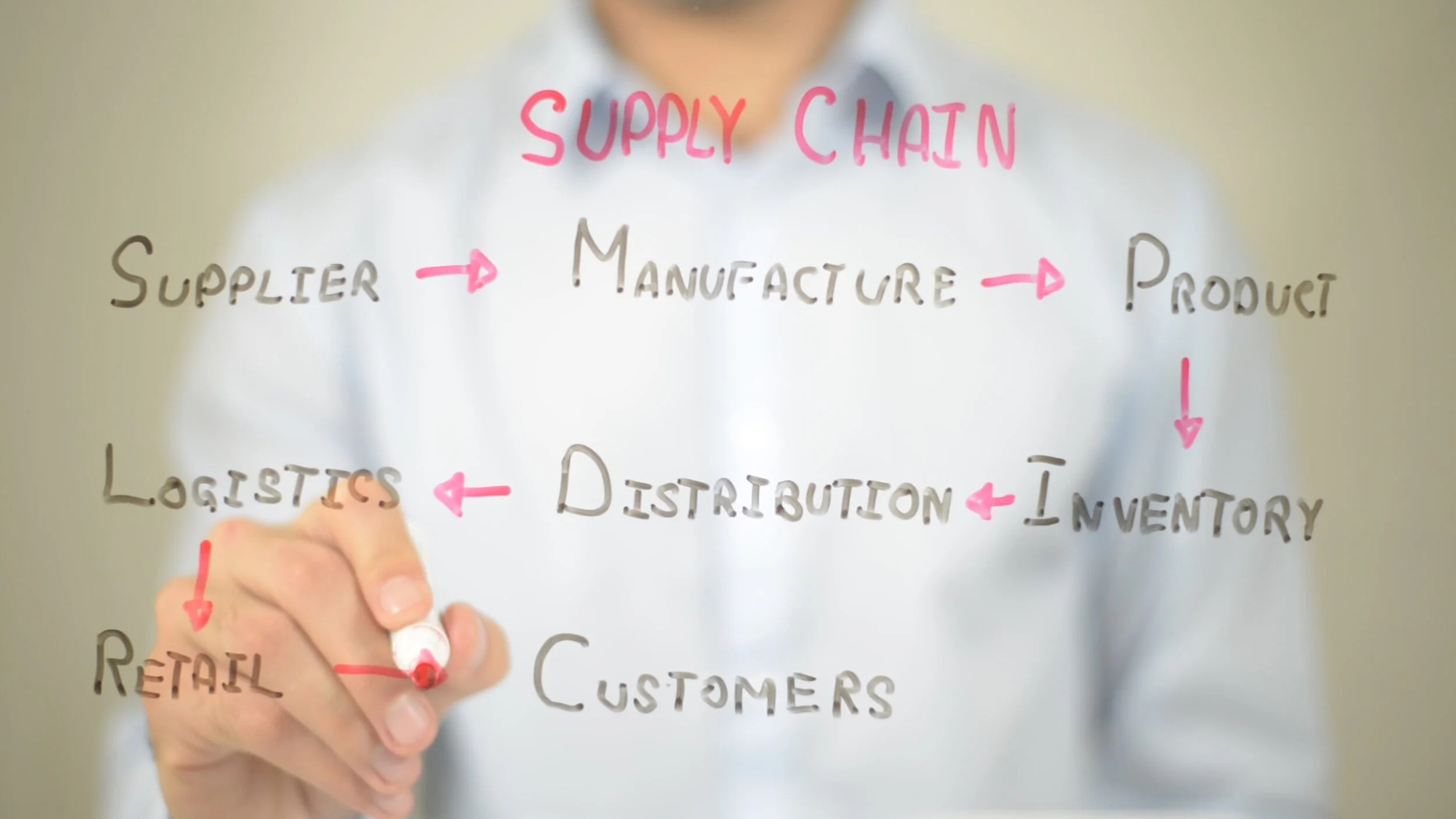
The collaboration between marketing and supply chain managers is growing in importance. As Gerri Knilans states in Trade Press Services, “Marketing supports supply chain agility and flexibility.” It is marketing’s resources and knowledge – especially related to consumer demand - that allow for informed supply chain decisions. One of marketing’s primary functions is communication, as Knilans demonstrates, it plays a significant role in a well-functioning supply chain (See Image).
Brands with sustainable Value Chains
Both Patagonia and Prana provide excellent examples of the integration of marketing with sustainability and supply chain management. Patagonia is perhaps the leading company that incorporates place into their marketing mix. Their Footprint Stories provide narratives behind their sourcing decisions like this one discussing manufacturing of surf gear. Likewise, Prana also is heavily committed to its supply chain. With their Clothing for Positive Change movement, they work diligently to ensure that their suppliers share their values with an emphasis on respecting the planet and people through responsible practices. Both Patagonia and Prana exemplify the importance of place within their marketing mix. Furthermore, they commit their organizations to ensure that sustainability is at the foundation of their overall value chain.
“We have a responsibility to know where our products are coming from, what they are made of and the conditions of the places where they are made to ensure compliant, responsible conditions across the supply chain and safe products.”
Don’t forget the Value Chain
Marketing must be involved with supply chain management, and it is even more essential in creating sustainable products. The process begins with product development. Marketing ensures that product sustainability requirements included in product design and integrated into sourcing decisions. Marketing also can play a vital role in communicating throughout the value chain – keeping both the raw material producer and the customer aware of the company’s commitment to sustainability. Brands venturing on their sustainability journey need to consider that its sourcing decisions are a critical aspect of its value proposition. These strategic choices belong in the marketing mix. Ultimately, customers will want to know this information, and through transparency and marketing, they will better understand a brand’s value.
RELATED TOPICS ON MARKETING AND SUSTAINABILITY

Sustainable Brands Should Not Use Cost to Set Pricing
Companies deciding to venture towards a more eco-friendly model need to view the added cost of doing so not as an expense, but as added value — then communicate that to their customers. The marketing team makes that happen. By first incorporating the customer’s sustainability requirements into the product offerings, marketing then translates that added value into a monetary value the customer assigns to it, conveying it to them with a price they are willing to pay. Ultimately, their goal is to ensure that the price is neither too high nor too low.
Viewing Sustainability as Added Value
The Top Barriers to Buying Sustainable Brands
Price premium: Globally, consumers cite price premium as a leading barrier to buying sustainable products.
Lack of awareness and trust, and confusion about sustainability claims: Lack of awareness, as well as trust issues and confusion about claims, are also top deterrents.
Source: The Conference Board - Global Survey Asks 30,000+ Consumers About Views on Sustainability (Feb 2020)
According to a survey of consumer views on sustainability by the Conference Board, two factors hinder the purchasing of sustainable products: the price premium and lack of consumer awareness. This is probably not surprising to companies producing more sustainable products. At the same time, "NYU Stern’s Center for Sustainable Business performed a study in which they discovered that 50% of CPG growth from 2013 to 2018 came from sustainability-marketed products. This suggests that many customers are moving away from less eco-friendly products and “voting with their dollars — against unsustainable brands.” (Source: Research: Actually, Consumers Do Buy Sustainable Products).
What does this mean for companies pursuing a more sustainable business model?
First, existing brands should realize their customers need to understand the value being offered — is the price they are paying worth it? Therefore, pricing should be based on the brand or product’s value proposition - not cost.
“For a company like ours, pricing is largely driven by cost structure.”
There is no doubt that companies employing sustainability practices may realize higher costs due to their efforts. Sustainable packaging company — EcoEnclose — provides an interesting example of sustainability and pricing in which they explicitly state that cost structure drives their pricing.
Yet, further reading on that page reveals that the real basis for their pricing strategy is the value chain they provide their customers. As their website states: “EcoEnclose has made informed decisions we believe are essential to living out our commitment to sustainability and offering our customers value and transparency in the form of true eco-friendly packaging.” Specifically, they offer the following seven unique selling points:
They offer “Source Verified and Consistent Recycled Content.”
They have mastered the “Impact of Manufacturing with Recycled Content.”
“Where Items Are Manufactured” is in the United States.
Their “Size of Business and the Type of Operations” — independent nature and smaller size directly translate into increased customer service commitment.
They provide leadership on sustainable “Innovation and R&D”
Their products offer many “Features and Functionality”
“Your Brand and the Customer Experience” benefits from their packaging options serving as the first tangible impression a company will make on their customers.
Therefore, instead of treating these expenses as costs, they should view them as added value for their clients. Rather than explicitly stating why their prices are higher, they could emphasize their unique selling point derived from their sustainability choices. (which, perhaps is the intent of the page)
A simple syntax change – replacing “cost structure” with “value chain” could change EcoEnclose’s discussion.

EcoEnclose is a leading sustainable packaging supplier

Aligning pricing strategy with the unique value proposition of sustainability can help encourage customers into paying more for sustainable products.
Companies deciding to venture towards a more eco-friendly model need to view the added cost of doing so not as an expense but as added value — then communicate that to their customers. The marketing team makes that happen. By first incorporating the customer’s sustainability requirements into the product offerings, marketing then translates that added value into a monetary value the customer assigns to it, conveying it to them with a price they are willing to pay. Ultimately, their goal is to ensure that the price is neither too high nor too low.
Other topics in marketing and sustainability

Persuading Consumers to Pay More for Sustainable Products
Pricing sustainable products begin with a unique selling position that consumers can translate into the value they seek at a price they are willing to pay. The marketers’ job is to always focus on the value being offered and understand the factors that will influence consumers' perception of price. Companies must acknowledge that sustainability will impacts costs – both positively and negatively. Yet, they should not set prices based exclusively on their expenses. Instead, focus on the offered value and charge accordingly.
coupling pricing strategy with Sustainability’s Unique Value Proposition

According to Nielson in “THE EVOLUTION OF THE SUSTAINABILITY MINDSET”, consumers are 50/50 on their willingness to pay more for sustainable products. This reality provides a challenge to many companies who wish to offer more sustainable options. With nearly half of their potential customer base not willing to pay higher prices for these offerings, brands must determine the best pricing strategy that will attract the most people. Although a reasonable question might be “how do I get them to want to pay more?” a better approach might be to ask how we should “demonstrate sustainability’s unique value proposition.” Unfortunately, that may mean offering a price that is aligned with the value they currently perceive. But that doesn’t mean they will not pay more in the future as they become more aware of the value they will receive.
How and when you choose to raise prices is an equally important part of pricing strategy. According to Rice University’s Vikas Mittal, “Price increases, done incorrectly, often result in customer dissatisfaction and brand switching.” In a 2016 American Marketing Association article, he provides four specific levers designed to help companies create customer-based strategies for raising prices (See infographic). Brands seeking to increase product prices because of sustainability initiatives should consider these suggestions to address customer price sensitivity.
Pricing for Value
Brands need to avoid myopically developing pricing strategies based on the “sustainability” merits. Companies employing socially responsible practices still need to price strategically and should not assume consumers will accept a price premium because of sustainability. They must ensure the value offered meets customers’ needs and that the price accurately reflects it. Before setting prices, marketers should also consider the following:
Elasticity of Demand
Reference Pricing
Branding

Sustainability Pricing Strategy Considerations
Elasticity of Demand: Products with elastic demand will realize a loss of sales as price increases - even if the offering is more sustainable than the alternatives. Items with inelastic demand, however, are not price-sensitive, which allows marketers to adjust prices upward. Understanding these sensitivities can empower marketers to make better pricing decisions. Ideally, marketers should focus on developing sustainable products with inelastic demand. Yet, if consumers view products as commodities, then it becomes more challenging.

Apple is a good example of how Elasticity of Demand, Reference Pricing and Branding impact pricing strategy for the computer and smartphone market.
Reference Price: Consumers compare an offering price to what they perceive to be a fair price for that product. This comparison is typically a range. Where that range falls depends on the type of item. For certain items, this range could be extensive or be dependent on the sales channel. For commodity items, however, the perceived fair price range can be quite narrow. Understanding consumer reference pricing is crucial in determining MSRP.
Branding: Related to reference pricing is branding. It is not uncommon for consumers to consider some brands pricier than others. Marketers need to consider their brand’s positioning when deciding on a sustainable product pricing strategy. If a consumer does not perceive a brand as a premium-price one, it may become harder for them to introduce higher-priced offerings. On the other hand, it may be the perfect time to consider repositioning the brand by offering a new value proposition to customers.
It is Challenging
With the rise in consumers accepting sustainability, the marketing team’s role in pricing decisions becomes even more critical. Failure to include them may very well end up in a loss of sales and profitability. While a significant majority of consumers are ready to purchase sustainable items, there are far fewer who are willing to pay more to buy them. Although this paradox is not unfamiliar to companies, it does create a perplexing challenge – “How can we offer these products for our customers to buy?” Business managers cannot answer by saying, “We will charge more.” Embracing sustainability is a strategic choice that requires proactive marketing, which begins with product development and extends to price. Strategic pricing is not easy, and including sustainability in the value proposition creates additional complexity for companies to consider.

Pricing sustainable products begin with a unique selling position that consumers can translate into the value they seek at a price they are willing to pay. The marketers’ job is to always focus on the value being offered and understand the factors that will influence consumers' perception of price. Companies must acknowledge that sustainability will impacts costs – both positively and negatively. Yet, they should not set prices based exclusively on their expenses. Instead, focus on the offered value and charge accordingly.
It is promising to note, however, that price parity between sustainable and less-sustainable products is starting to occur. This new reality is allowing for sustainability to become more price-competitive. As a result, brands may be able to reach more consumers – especially the 51% not willing to pay more. This fact does not necessarily mean consumers will convert to these greener items. As a result, the marketer still has more work to do.
Other topics on marketing and sustainability

Consumer Behavior Towards Sustainability
When marketing is absent from product design and development, they relinquish their leadership role in delivering customer value. With sustainability becoming more relevant to consumers, this abdication becomes even more devastating. Marketers must have a clear understanding of their company’s corporate responsibility strategy and integrate it into the marketing mix. At the same time, they must also understand the specific customer needs, coupling both those requirements and the approach into the product design. Finally, they must ensure that product transparency is available to the consumer so they can make an informed purchasing decision.
Understand the customer’s sustainability requirements and incorporate them into the product.
The outdoor industry provides many examples of incorporating customer requirements into sustainable products. Many outdoor enthusiasts desire technical performance gear and apparel that allows them to enjoy their activity. At the same time, these consumers recognize that there are environmental consequences due to product manufacturing. These impacts can affect the natural recreational places they enjoy as well as communities and people.
One particular issue is the use of perfluorinated compounds (PFCs) in making durable water repellent gear like rain jackets. Consumers want apparel that can keep them dry in wet conditions while at the same time desire minimal chemical use. Columbia Sportswear addressed both of these consumer needs in the development of the OutDry Extreme Eco Rain Jacket. As discussed in the video, Columbia created a product with sustainability in mind. They eliminated PFCs and incorporated recycled plastic, minimized packaging, and reduced resource consumption to create a sustainable product.
Creating sustainable products that consumers want requires companies to be both innovative and transparent. In its infographic, “Sustainability is meaningless without transparency,” UL states that transparency requires companies to share insights about their products. They need to provide information on product contents (materials and chemicals), manufacturing processes, and the associated environmental impacts. Using tools or systems such as ones provided by Bluesign Technologies can assist. With marketing engaged in product development, they can use systems like Bluesign to identify material specifications that align with customer requirements. Additionally, marketing will understand the sustainability outcomes and be better prepared to share that information with consumers. For instance, as shown in the video above, Columbia Sportswear provides valuable product details regarding the OutDry Extreme Eco Rain Jacket. In doing so, they share the product’s development with its customers – providing them with the requisite transparency needed to make sustainable choices.

Sustainability Resources for Product Development

Source: Bluesign Facebook Photos
BLUESIGN certification gives consumers assurance that only companies that act responsibly were involved in the manufacture of a product that is designated with the bluesign® PRODUCT label.
Other Topics on marketing and sustainability
Product Development is Marketing
When marketing is absent from product design and development, they relinquish their leadership role in delivering customer value. With sustainability becoming more relevant to consumers, this abdication becomes even more devastating. Marketers must clearly understand their company’s corporate responsibility strategy and integrate it into the marketing mix. Simultaneously, they must also understand the specific customer needs, coupling both those requirements and the approach into the product design. Finally, they must ensure that product transparency is available to the consumer to make an informed purchasing decision.

SUSTAINABILITY MARKETING IS SIMPLY JUST MARKETING
Sustainability is increasingly becoming a critical part of business strategy. Companies see the value of sustainability in both the social benefits and the impact on the bottom line. Additionally, current customer research indicates that consumers care about sustainability…..

© Rawpixelimages | Dreamstime.com
Sustainability Marketing Definition
With ample online resources willing to address green business strategies, very few recognize that products and services' eco-friendly marketing is no different from marketing their less-sustainable alternatives. Still, many websites define marketing sustainability - as if it is a separate discipline or marketing function.

Examples of Marketing Sustainability Advice found online
One example is from Diane Maceachern. Her article, “To Market Sustainability, Focus on What Consumers Love, Not What They Hate,” provides seven strategic insights for marketing sustainability. Another example is Allison Woodbury’s “Green Marketing: 5 Strategies Every Manufacturer Must Know.” Both of these articles are insightful and offer useful information.
Nevertheless, the same advice applies to the general field of marketing as well. Additionally, the recommendations primarily focus on Promotion - the fourth “P” in the marketing mix. This editorial emphasis requires both authors to assume that their audience has adequately addressed Product, Price, and Place. Sustainability marketing - like traditional marketing - requires a strategic approach that includes all 4 Ps - a green marketing mix.
Sustainability as a marketing tool
Marketing as a Sustainability tool

© Sarayut Thaneerat | Dreamstime.com
The key to answering the question is recognizing that marketing sustainability is merely marketing. The American Marketing Association states that "Marketing is the activity, set of institutions, and processes for creating, communicating, delivering, and exchanging offerings that have value for customers, clients, partners, and society at large." This definition even applies to sustainability-minded businesses. Yet, many companies and even seasoned marketers want to create a new marketing discipline that focuses on sustainability. Why is that? Perhaps they are looking for a simple solution or believe that sustainability requires a new marketing approach. Still, there is nothing different or unique about sustainability, requiring its own method. Like traditional marketing, marketing sustainability requires adhering to the basics – The Marketing Mix: Product, Price, Place, and then Promotion.

Click on image to receive a free copy of this booklet on Marketing Sustainability
There is no panacea for marketing sustainability. It requires the same strategic marketing basics that have enabled companies to be successful in the past. Effective sustainability-minded brands like Patagonia, Columbia Sportswear, Prana, and Toad & Co recognize this fact and embrace it. Their success is rooted in a well-executed marketing mix that emphasizes the mutual importance of Product, Price, and Place along with Promotion.